What's on This Site

Purpose: to function as a clearinghouse of useful information, as well as an incubator of provocative and innovative ideas. I have done this by trying to break down some of the complexities associated with the overlapping issues of energy, culture, politics, and economics. I cover a range of political, social, and scientific perspectives here. Although global in focus, there is a slight regional slant toward the western American state of California. The physical layout of this site is basically divided into two vertical halves: the left-hand side, and the right-hand side.

Down the left side (mostly blog posts & links):
- My Blog Posts
- Rationale: Why I designed this site
- Related External Blog and RSS Links: over 50 sources of up-to-the-minute information on politics, economics, and the environment
- My Personal Links
- Selected Global Resource Statistics
- About Me
- The Peak Oil Clock


Down the right side (mostly multimedia & links):
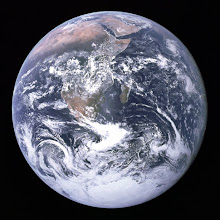
- Revolving Globe
- Videos: Setting the Context on Overall Resource Usage
- Additional Videos/Podcasts: Linking Energy, Politics, and Economics
- Energy-Environment-Finance Links: nearly 100 information sources and tools covering a wide range of approaches and applications
- Yet More Videos: Transition Solutions and Proposed Next Steps


Across the Bottom (information section, mostly reference material on energy consumption):
- Suggested Additional Reading and Viewing
- World Energy Consumption Statistics (year-to-date, updated in near-real-time)
- US Energy Consumption Statistics (year-to-date, updated in near-real-time)
- World Oil Prices (European Brent & American WTI, updated daily)


Keyword Search Here:

Showing posts with label international political-economy. Show all posts

Monday, June 13, 2011

Crisis on the Horizon, Fissures in the System, and Autism in Command


The following line from the attached article, from the 8 June 2011 edition of the Mail Online, perhaps best summarizes our immediate situation, in human terms: 

A study by the [UK’s] Institute of Fiscal Studies today reveals many of the country’s poorest pensioners already face a nightmare choice between heating and eating.

So, in one of the world’s wealthiest countries of the 20th century (talk less of the 19th), the early 21st century was already starting to look strikingly different.   What changed?  Why such dramatic (and disturbing) social indicators, and why now in the UK?

Of course, those who follow this blog may already know part or all of the answer: in the last 5 years or so, the UK made the transition from being a net exporter to being a net importer of the fossil fuels needed to run its economy, especially petroleum product (crude oil and natural gas).   That is certainly the largest and most significant shift for the UK, economically; however, it is by no means the only factor.   [N.B., I conjecture that former PM Tony Blair was actually aware of this, as a then-looming problem; hence his short-sighted, politically motivated “deal with the Devil” to ally his Labour (socialist) government with  the far right politics of the neoconservative Bush Administration, in the US.  The bitter results of that un-holy alliance, sometimes called the “Blair-Bush Project,” are still being felt in many parts of the world today.  This would also end up evolving into much of incoming President Obama's "foreign policy inheritance" from the Bush Administration.] 

In the US (itself a former net energy exporter), the story is essentially the same.   The cost of importing energy in the US, over the past 3 decades, has taken a gradually increasing share of the US national budget.  In concrete terms, as of this writing, the United States borrows roughly 1 billion dollars per day per year (for every working day per year, exclusive of holidays and weekends) to help finance its energy requirements.  Moreover, in the US as in the UK, there is a minority of households which no longer earns enough money to have both heat and food, during the coldest of winters. 

This issue became painfully obvious to me when the Government of Venezuela (yes, “that one!”) began giving development assistance to poor households in the northeast section of the United States.   Using its state-owned fuel service enterprise (yes, once again that means “socialism” for anyone who still cares), via its Citgo gas stations, the Government of Venezuela began dispensing subsidized heating oil to selected low-income communities in New York City and in Boston.  That was a major PR and public diplomacy coup for the administration of Hugo Chavez.  It also resulted in the provision of a vital service for a number of low-income households in targeted zones within those two American cities. 

Throughout the industrialized world, governments have been coming under increasing pressure to provide social services,  as part of an overall government-sponsored social safety net for vulnerable sectors of their respective populations.  Moreover, they’ve been asked to so at a time when energy and other commodity prices continue to rise on world markets.  That's the first noose.  The second noose placed around the necks of many national leaders is in the form of the neoliberal package of "corrective" measures, allegedly to set their economies aright: short- to medium-term term lending facilities established by the International Monetary Fund, or IMF.  Greece is the poster-child of the moment; however, the entire greater Mediterranean region is one big political-economic cauldron of discontent, at the moment.  Curiously, the southern half of the region has been named: either the "Arab Spring" or the "Arab Awakening."  No such positive re-branding has been applied to the northern half of that same tumultuous region, however.  Good things take time, I suppose.  


Throughout the region, and indeed throughout the world, the fundamentals of the current political-economic crisis are essentially the same.  In short, the cost of doing business (in either the public or the private sector) is continuing to rise, due to increases in imported fuel, and other key commodity price increases on "world" markets.   I emphasize world markets here, inasmuch as each country must make their purchases from the same handful of international commodity sellers or traders. The examples of the current crisis are all around us now.  Choose any large-scale service provider now, and I will likely show you a struggling industry somehow related to it: airlines, taxis, hospitals and health care, universities, local governments, food pantries and other nonprofit organizations, and of course households—and on and on and on.        

In the US mainstream media, stories that focus on this type of big picture perspective are few and far between.   News about our long-term ecological-economic predicament is diced and sliced into easily digested ("pre-digested?") bits—they are like “news vignettes” actually, served up like “dainty appetizers of information” at a cocktail party: individual complaints about gas prices here, and a bit about rising food prices over there.   Periodically, there is a “hard-hitting report” on how this or that grocery store was “cheating” customers on inflated food prices, in response to the latest climate catastrophe somewhere in the Midwest.   Nowhere, however, is there any “mainstream” media outlet that consistently attempts to connect the dots between our energy resource consumption patterns, resource availability (including medium-term supply-demand factors), and the medium- to long-term socio-economic implications thereof.   Why might that be?  It's enough to make you think there might actually be certain things we're not "supposed" to know.  

The idea that key commodity prices (ergo, general consumer prices) have been trending upward since about the year 2000 for all OECD countries, due to the depletion of cheap oil on the world market, never seems to enter popular discourse—not yet anyway, and certainly not in the US.   All we in the US get are those little news vignettes, typically wedged in between other pieces of so-called “news” on women’s hem lines for this spring, and in-depth special reports on burning topics like “how to lose weight by eating more."  Then there are the other 267 cable channels dedicated to specialty consumer tastes like leisure sports, game shows, Internet shopping, and “reality TV”  (the irony is so thick you can cut it with a knife, on that one).   For us to be “dumbed down” any further would be to take what was left of our collective critical thinking skills, and plant them as kind of fertilizer, to be used in the gardens of our post-modern delusions about how the world supposedly works.  Rome is on fire, and we are all "Little Neros."   As an educator, the actual propagation and maintenance of this type of mass ignorance (much like a tropical cyclone) is both fascinating and frightening to watch happen, all at the same time.    Personally speaking, I am both intellectually fascinated by the process, even as I am emotionally horrified at the possibility of somehow being overtaken by it.

In the meantime, real flesh-and-blood human beings who have lived in formerly rich countries like the UK and US (and who also happened to be "poor") must now occasionally choose—during unusually cold months—between food and heat.   They might not have money for both in sufficient quantity now.   It’s a small minority of people, at present. But this is also how it always begins, of course: small cracks in a system, going unnoticed and uncared-for, for long periods of time.  Then, seemingly “suddenly,” the small-but-growing  cracks that nobody cared to check somehow became connected to each other, to form a huge fissure.   By that time, of course, the tipping point has been reached, and “the crisis” (whatever form it may ultimately take) is subsequently unleashed.   We (those who care about such things) saw this happen in mid- and late-2008.  The financial crisis was a sight to behold, indeed.  Again, personally speaking, my own intellectual fascination was somehow in a strange competition with my combined sense of moral outrage and absolute horror.   It was like watching a terrible roadside accident: I didn’t really want to see it happening, but I somehow couldn’t turn away either. 

This duality within me—that “attraction-revulsion factor”—is in some ways reflected in society at large.   We all want to “do the right thing” most of the time, but then again, “that piece of ____________ (insert your own personal vice, here) looks really attractive to me right now!  It would just feel so good if I _____ (insert verb here) it.  It might even relax me, or make me feel better."  And so it goes.   We know we shouldn’t eat that piece of cake.  We shouldn’t sleep with that stranger.  We shouldn’'t invest in that blood diamond.   We shouldn't buy that Hummer.  We shouldn't cut down all the trees and rape the Earth.   


Enter bargaining (with whom, exactly?): because ___________ (our current vice) may already be “in process” somehow, we decide that we will stop either tomorrow, or next week, or next year, or ten years from now, or when our children are grown—or perhaps when we’re dead.   And so it goes.   It’s been all about taking what I want for me and mine, anyway.  And as long as “me and mine” remains the dominant paradigm (individualism run amok), at a time when “me-ism” is destroying the very environment that gave rise to it, the the very concept of the collective remains in deep trouble. 

Duality abounds in the Universe, of course.  It is everywhere—even in our current terrestrial crisis.  In this regard, if there as a positive aspect to the potential demise of our (post)modern lifestyle, it is this:  the very nature of the crisis itself will force a re-think among our leadership.  It will be forced—through the sheer magnitude of the crisis which I assert is coming (or perhaps which has already “quietly” arrived)—to reassess how we have organized ourselves to interact with the Earth and her resources.   


My main concerns at this point are two:  1) the time factor, and how long will it take them (and therefore “us”) to turn the steering wheel of The Titanic; 2) the autism factor, with regard to how deeply disconnected our leadership actually become from physical reality now (e.g., its fundamental capacity to interpret signals in the surrounding environment, and then respond to them in a “socially appropriate” way?).  Ice bergs can now be dimly seen through the fog of our collective confusion and autism.  How soon before we will be willing and able take action and change course?  The answer depends in part on folks like you and me, and how we respond to what's coming next.  

I invite you all to continue reading, thinking, talking, and sharing.

Blaine


Sunday, January 18, 2009

Africa and the Global Economic Crisis


Let me now return to a theme near and dear to my heart: political and economic development within the Continent of Africa. Since I first started working in Africa over 20 years ago, I have come to learn this: in order to understand some of what takes place within Africa, we must also transcend Africa’s geographic boundaries. By this I mean that Africa (and any of its individual states), like every other major region of the planet, is subject to global phenomena which aren’t necessarily isolated to one geographic point of origin.

The current global economic crisis is a perfect example of this.

This is a "global" phenomenon, which is currently (since post-WW II) propped up by what political economists call "dollar hegemony" (e.g., a system of post-colonial / neo-colonial control, wherein the dollar has been used to "buy influence" the world over). However, as Gramsci reminds us, in order for it to be most effective hegemony also requires the "consent of the ruled," and not simply the sheer "will of the rulers." Ergo, countries buy-in to the concept of dollar hegemony as long as their own ruling elites have something to gain by it; however, after benefits begin to outweigh costs for too much time, those some national elites begin to buy-out (e.g., dumping of dollars on world currency markets).

Once/if that happens, the great social experiment known as the United States of America will be finished (as a global hegemon, anyway). The name of the game, globally, and since the end of WW II at least, has been about propping up the value of the dollar. Remember: after the victory of WW II, the US was in a position to dictate how things would work in the global economy. The biggest issue: the most heavily traded commodity in the world--petroleum--was to be traded in US dollars, and US dollars only. In 2008, that process began to slowly change, as Euros have begun to be used for a few purchases, here and there, in the global economy. Most who have been following this trend anticipate that it will only grow.

Having said that, the still-larger issue here is the generalized, symbiotic relationship between the natural resource base and the economic base; and subsequent relationship between the economic base and the social-political base. The article below—from Inter-Press Service--is an excellent example of this.

One word of caution, focusing on the use and abuse of economic indicators. One paragraph within the article, speaking to Africa’s relative insulation form the economic crisis, reads as follows:

"Africa is expecting an average growth rate of six percent in 2009. However, the turmoil will affect those countries that depend on the export of commodities and natural resources."

As the great American writer Mark Twain once wrote (and I paraphrase), “A man standing in a bucket of boiling water with one foot, and a bucket of ice water with another foot, is ‘on average’ bathing in comfortable water.” Those Continental “average growth rates” that economist like to tout so much have to be disaggregated further; otherwise, they conceal vast income disparities between major resource exporters like South Africa and Nigeria on the one hand, their impoverished neighbors like Tanzania and Mali on the other hand.

Finally, “countries that depend on the export of commodities and natural resources” would be pretty much all of the countries of Africa! Development economics 101: the classical problem of so-called under-development is the problem of countries exporting raw, unprocessed, primary commodities. They do this precisely because they do not have the “heavy industry” to make refined products.

So, as you read the article below, consider the relationship between ecology, energy, and economics—the three E’s! Consider also, that this challenge is not restricted to Africa. Indeed, it is a global phenomenon, with local implications.

Dr. Blaine

***


ECONOMY:Global Crisis Should Spell End of Laissez-Faire Doctrine
CAPE TOWN, Oct 31 (IPS) - The real question to ask about the global financial crisis is whether ‘‘it will go deep enough for the big economies to realise that the market should be controlled more. The philosophy of laissez-faire simply does not work’’.


This is the viewpoint of Sampie Terreblanche, emeritus professor of Economics at South Africa’s University of Stellenbosch, speaking at a public debate on the crisis in Cape Town. The debate was organised by the Centre for Conflict Resolution, an organisation promoting conflict resolution in Africa through training and research. Terreblanche, who is the author of ‘‘A History of Inequality in South Africa 1652-2002’’, regards the crisis as ‘‘very serious. There is no doubt that it will persist for the next couple of years.

‘‘As a result of laissez-faire, the inequality within countries and between the rich north and poor south has increased,’’ Terreblanche added. ‘‘The economy needs to be guided and not be left to its own devices.’’ According to the doctrine of laissez-faire, meaning ‘‘to leave alone’’ in French, an economy functions most ‘‘efficiently’’ without any interference of the government.


While there are concerns with regards to financial stability and inflation, it seems so far that African countries will weather the financial crisis better than others. Africa is expecting an average growth rate of six percent in 2009. However, the turmoil will affect those countries that depend on the export of commodities and natural resources. ‘‘For the past years and up until recently, oil-producing countries like Nigeria and Angola have thrived due to the escalating oil prices,’’ Jorge Maia of the Industrial Development Cooperation (IDC) said at the debate on Oct 30.

This was ‘‘until recently’’ because of the significant drop in crude oil prices as a result of the global financial turmoil. The IDC is a South African state-owned development institution that finances businesses and aims to contribute to sustainable economic growth and economic empowerment.

Crude oil prices have plunged by 60 percent in the third quarter of 2008, from 147 dollars a barrel in July to around 60 dollars three months later. ‘‘Countries that rely on oil exports, such as Nigeria and Angola, are noticing the effects of this as this development means less income,’’ Maia continued. With a production of 1.9 million barrels per day, Angola recently replaced Nigeria as Africa’s largest oil producer. Since 2006, Nigeria saw a 25 percent decline from a daily oil production of 2.5 million barrels. This weakening is, among other factors, a result of attacks from militants in the Niger Delta.


Maia told IPS that South Africa, the strongest economy on the African continent, depends heavily on the export of commodities and is therefore also taking strain as a result of the financial turmoil. The main economic sector affected is the mining industry, which contributes six percent of South Africa’s annual gross domestic product (GDP). The most important export commodities are iron ore, coal, platinum and gold. ‘‘These four products make up 75 percent of South Africa’s mining export basket and the value of all but the first has gone down -- platinum in particular,’’ said Maia. Recent mining figures show that the platinum price dropped with 21 percent in the month of October 2008. Since March 2008, when platinum reached its record price of 2 308.80 dollars an ounce, the value of this precious metal has declined with 65 percent.

This poses a problem for South Africa which harbours 80 percent of global platinum reserves. Maia emphasised that the financial crisis is not the sole cause behind the slowdown in South Africa’s mining industry. Mining companies had to cut their production as, during the first half of 2008, South Africa was hit by an electricity crisis. The country’s electricity producer ESKOM was no longer able to meet the national demand for power. Apart from South Africa’s mining industry, the construction sector, manufacturing, and retail industry are also under pressure as a result of the global credit crisis. The currency has been hit as well. ‘‘The South African rand is very vulnerable at the moment.

Besides the Icelandic kroner, it is the currency that has depreciated the sharpest since the credit crisis hit the world,’’ Maia pointed out. All of this, combined with an increasing pessimism about the economy, may result in a deceleration of South Africa’s economic growth. An overall growth of 3.4 percent is expected for 2008, which earlier this year was anticipated to be around 5 percent. In 2009, the growth for South Africa will be around 2.5 percent, Maia gauged. The slowdown in Africa’s biggest economy will have an impact on the rest of the continent. ‘‘When South Africa struggles, the rest of Africa struggles,’’ he explained. Despite the severity of the turmoil, some countries might actually benefit from the declining commodity prices, Maia noted. ‘‘While exporting countries suffer, regions that rely on the import of natural resources such as oil benefit from these developments – simply because products such as oil have become cheaper.’’


Africa is also not doing badly compared to the North America and Europe. According to the International Monetary Fund’s Economic Outlook for 2009, the overall African economy is expected to grow with 6 percent the coming year. ‘‘The U.S. economy, on the other hand, barely comes below the zero percent mark.’’ Africa is faring better as it still benefits from investments from China. According to the World Bank, the amount of Chinese direct investment in Africa amounted to 1.18 billion dollars by mid-2006. (END/2008)


Monday, December 29, 2008

On Madoff, the Maestro, and Marx: Who Lost American Capitalism?

Was Karl Marx basically right? Are we about to witness the final death knell of global capitalism, as the few remaining big players begin to devour each other in a financial feeding frenzy? I myself am not usually one for that old line of socialist hyperbole, in the tradition of those outdated 20th century critiques of capitalism: the “final crisis,” the “final contradiction,” the “final collapse,” etc. These biblical-sounding, millenarian predictions have typically proved to be somewhat off the mark. Because this was so, there would then have to be some form of “revisionism,” wherein the arrival date that the socialist avatar that would come down to Earth from “egalitarian heaven” would have to be postponed—until the next “final whatever.” And so it went.

Capitalism has repeatedly proven itself to be incredibly adaptive, over time. Subsequent “final” events over the course of much of the last century—initially viewed as “crises”—would typically turn out to be “opportunities” for capitalism to reinvent itself, yet again.

Notions of arcane theoretical modeling aside, the system of accumulation known today as global capitalism does not appear well—not at all now, not anywhere. Since the beginning of the 21st century, the United States of America (still, as of this writing, the largest economic engine in the world system) has experienced what can only be called an epidemic of deep-seated financial corruption, in a broader context of systemic financialization (in a still broader context of gradual class closure, or economic collapse). Pardon me, as I engage in my own type of hyperbole. But this time, I fear, the hype is truly warranted.

This deep-seated corruption was typified, for example, in the Enron scandal (and the subsequent, anthropogenic California energy crisis) that broke at the turn of the century. Not only were Ken Lay, Jeff Skilling and Company engaged in politically authorized, financially deregulated, Ponzi-like malfeasance; they were also supposedly being “audited” by third party, professional accounting firms that were charged with overseeing their activities (remember the now-defunct Arthur Andersen consulting firm?).

In late 2008, we had the Bernard Madoff scandal. To be sure, financial malfeasance is happening all the time—somewhere. Moreover, two prominent financial scandals involving billions of dollars maketh a “final crisis” not. However, it is both the depth and breadth of this particular scandal which is so revealing to us now. In what is being described in the mainstream US media as an elaborate “Ponzi Scheme,” Madoff actually “made off” with approximately $50 billion in “funny money.” Few people are laughing, now, as it appears that Bernard Madoff has defrauded some of the wealthiest or most prominent members of our society.

But what I would like to highlight here is the very nature of the exposure of the crime: it was only as a result of the downturn in the economy that Madoff’s fraudulent activities were brought to the light of day. Had the economy still somehow been in a growth phase, akin to what we witnessed in the US pre-2000, he would have continued perpetrating himself as some kind of financial guru, we would have believed him, and he would have continued perpetrating his Big Lie, defrauding yet more people of yet more billions. Growth in the system, at least in part, appears to have been a part of the problem here. I will make more of this “economic growth problem,” later on.

According to Yahoo! News, of 12 December 2008:

It appears Madoff ultimately was unmasked by the worst financial crisis since the Great Depression. Just like many hedge fund operators, Madoff received a wave of redemption notices in recent months, from investors looking to preserve cash. Authorities say investors sought to pull out some $7 billion from the fund — money Madoff apparently did not have. In the end, most Ponzi schemes collapse when too many investors seek to pull their money out at the same time, and the operator doesn’t have the cash on hand.

But the financial crisis appears to be hastening that unwinding process, as it has dried-up all sources of liquidity. Banks are unwilling to lend and investors are fleeing hedge funds, stocks, bonds, commodities and other asset classes for the safety of cash. In September, another alleged Ponzi scheme collapsed, when federal prosecutors arrested Minnesota businessman Tom Petters. Federal prosecutors allege that much of Petters’ empire, which consisted of buying up distressed businesses, was based on a series of lies.

“Based on a series of lies,” indeed. It seems that Mr. Petters was borrowing ideas from the Madoff book. Again, I want to highlight the fact that as long as the system was able to induce economic growth, the “lies” continued. Only after the system began to collapse, did we begin to see what has really been going on. Now, it appears that The Truth is beginning to set us free.

However, reality can be complex. Just as revelations can come from lies, so deceptions can come from truth. I would here like to switch to the interesting-but-sad case of another fallen hero: Dr. Allan Greenspan (a.k.a., The Maestro, for his apparent ability to easily manipulate or control events in the global economy). On 23 October 2008, from the Wall Street Journal, Greenspan stated the following, before the US Congress:

In 2005, I raised concerns that the protracted period of underpricing of risk, if history was any guide, would have dire consequences. This crisis, however, has turned out to be much broader than anything I could have imagined. It has morphed from one gripped by liquidity restraints to one in which fears of insolvency are now paramount. Given the financial damage to date, I cannot see how we can avoid a significant rise in layoffs and unemployment.
(Source:
http://blogs.wsj.com/economics/2008/10/23/greenspan-testimony-on-sources-of-financial-crisis/)

It was broader than anything he could have imagined. What was it that had seemingly constrained his imagination so? A part of the answer can be found in the Washington Post, of 24 October 2008:

Alan Greenspan, once viewed as the infallible architect of U.S. prosperity, was called on the carpet yesterday, pilloried by a congressional committee for decisions that contributed to the financial crisis devastating world markets.

The former chairman of the
Federal Reserve said the crisis had shaken his very understanding of how markets work, and agreed that certain financial derivatives should be regulated -- an idea he had long resisted.

When he stepped down as Fed chairman less than three years ago, Congress treated Greenspan as an oracle, one of the great economic statesmen of all time. Yesterday, many members of the
House Oversight and Government Reform Committee treated him as a hostile witness.

"You found that your view of the world, your ideology was not right, it was not working?" said
Rep. Henry A. Waxman (D-Calif.), the committee chairman.

"Absolutely, precisely," Greenspan said. "You know, that's precisely the reason I was shocked, because I have been going for 40 years or more with very considerable evidence that it was working exceptionally well."

Again, as long as the economy was in a long-term growth phase, these concepts would be (superficially) somewhat easier to maintain. The economy was growing, it was true. And with that truth, the deception could be maintained. Once such growth severely slows or stops, however, the curtain is raised, revealing that which exists behind. What has existed behind the mysterious curtain of economic growth has merely been a pre-supposition of more economic growth. In a sense, the entire US economy was based on a more elaborate, highly intricate Ponzi Scheme: as long as there were ever more folks willing to buy in to the ever bigger scheme, everything appeared to be okay.

The Washington Post went on to write:

With the global financial system unraveling, economists and political leaders are coming to doubt some of Greenspan's most closely held views: that markets can exact self-discipline, that central bankers should generally not try to prick bubbles in the price of houses or tech stocks, that a policymaker's most powerful tool to encourage growth is to stay out of the way.

Even Greenspan seemed genuinely perplexed yesterday by all that had happened, hard-pressed to explain how formerly fundamental truths about how markets work could have proved so wrong.
It is indeed a shock, to both individuals and systems, when prevailing ideologies no longer seem to be relevant or true. The Washington Post, in conclusion, went on to say:

The tough talk reflected a widening sense that some of Greenspan's apparent successes in managing the economy from 1987 to 2006 were in fact illusory, that they came at the cost of building the biggest credit bubble in world history
.

Okay, so now it’s clear we’ve been bamboozled by neo-liberal economic philosophy for the past 25 years or more. What do we do now? First, we have to adjust our vision. We have to recast and readjust the type of models we deploy, and the time frames in which we deploy them. The time frame used by Greenspan et al. was far to short, in the final analysis. According to an editorial in Monthly Review magazine:

The extreme short-sightedness of building models on “a period of euphoria” and ignoring “historic periods of stress” meant that the historical reality of capital accumulation was simply written out of the analysis. As Marx explained, overproduction of capital inevitably leads to periods of massive devaluation, by which the system prepares the ground for a further expansion. “Business is always thoroughly sound, and the campaign in fullest swing, until the sudden intervention of the collapse” (Capital, vol. 3, chapter 30).

This analysis is okay, as far as it goes; however, I maintain that it does not go quite far enough. Not only must we concern ourselves with medium-term business cycles (typified in the 60-year boom and bust waveform pattern seen in the Kondratieff Wave, or K-wave); additionally, we must also look at the centuries-long patterns of regional and global ecological systems. Such ecological systems provide all of the foundational raw materials which are needed for the process of “material accumulation." Nowhere is this more apparent than in the current global (mis)management of the material and energy resources needed to fuel our old heavy industries. These natural resources—typified by petroleum’s impact on 20th century economic growth—are subject to physical shortage and depletion, which no amount of financial trickery (read, “wishful thinking”) can reinstate.

When viewed in this light, the final contradiction of global capitalism may not lay so much in financial bubbles as it may lie in something far more pernicious. The final contradiction may lie in the increasingly fragile “ecological bubble” in which we all now live. Only a framework that allows for both growth and contraction can be relevant and useful to us, over the long-term.

Dr. Blaine
© 2008

Friday, December 12, 2008

Saving the Auto Industry: US Industrial Policy 2.0

Overview

It's now time for a new US Industrial Policy. I am calling it "Industrial Policy 2.0." If you’ve been following the news recently in the US, you’ve noticed that there is some debate afoot as to whether or not the United States auto industry should somehow be “saved” or “rescued” or “bailed-out,” or not. Well, in typically annoying academic terms, I say the answer is both “yes” and “no.” Yes, the US auto industry does need to be saved—based on a rationale I hope to demonstrate below—but, no, the auto industry that comes out of that rescue package should not resemble the one that previously got rescued.

In other words, in the language of the World Bank, it’s now time for some deep "structural adjustment." This structural adjustment should apply to both the US auto industry, as well as to the US economy as a whole. As with any type of significant change, there will be benefits and costs, winners and losers. But before we get to that, let me give some brief background, in terms of how we got into this mess.

Background

- The United Auto Workers (UAW) and auto industry management joined themselves at the hip, strategically (building those stupid “dinosaur” cars!), before painting themselves into the corner in which they now find themselves


- Consumers followed them there, believing the hype that told them they could drive gas guzzling, dinosaur cars indefinitely—even as both global markets and geological conditions were (literally and figuratively) shifting underneath their feet

- Nobody in the US seemed to be paying attention to the fact that rising demand for oil on world markets was driving up prices—thereby raising the price of everything else, but especially fuel prices

- US politicians enabled the entire process, giving incentives to consume, consume, consume like there was no tomorrow . . . and, true to form, there may now not be a tomorrow for some sectors of that industry (and by extension, some other sectors the broader US economy)

Where We are Today

Okay, so what’s done is done. Ours has been (and continues to be) a society-wide affliction, based upon the “evil twin concepts” of minimally-regulated capitalism from the top, and barely-disciplined consumerism from the bottom. The examples are now legion: housing bubbles, credit bubbles . . . you name it. Now, the party’s over. The floor is a mess. All the intoxicating drinks have lost their little bubbles, and have gone flat. Hangovers are setting in.

The socio-economic impact of world oil price spikes have once again run their bloody course. “Demand destruction” has set in. That’s just a fancy economics term for destroying business activities (in this case due primarily—but not exclusively—to the very high energy costs of 2008). Supply and demand economics then go into effect: Since many business activities were killed off, the demand for the energy to run those now-extinct businesses has been reduced, or “destroyed.” Hence, the recent drop in world oil prices.

In the meantime, Europe is now exploding. China (currently our favorite creditor in the world) is looking somewhat fragile. Mexico is spiraling down into its own version of “Mad Max” on drugs. And the US ain’t lookin’ that great either. All of this roughly repeats the same pattern we saw in the 1970s, wherein all the governments of Western Europe fell, and Africa and Latin America went into a deep debt crisis, from which they’ve still not recovered. New York City went broke. All of this came, like clockwork, on the heels of the energy crisis of the 1970s. All of this has returned, once again, like clockwork, in the first decade of the 21st century.

Prescriptions for the Future?

To what extent are we willing (and able) to incur costs today, to lay the foundation for a more stable economic future tomorrow, for our children? That is the key question, I think. That has to be weighed off against simple muddling through, for short-term expediency, which we see so much of today. In the waning days of the Bush Administration (may it burn in Hell for all the evils it has heaped upon our world), we’ve seen a lot of muddling through, recently. This is the natural by-product of an inherited legacy of de-regulation of our markets—a policy of “no policy,” if you will.

Today, we need to do the same thing with the US auto industry (and by extension, the banking and finance industry) that the IMF has done with entire countries in times past: debt for equity swaps. This is a fancy economics term for “Yeah, we’ll loan you enough money for you to stay in your house, this year; but in exchange for that, we get to have a stake in your front lawn, using it as we deem necessary. Political scientists call this “government-controlled industrial policy.” Conservatives in the US call it “socialism.” Socialists (and others on The Left) call it reigning in the excesses of free-market capitalism. I now call it “appropriate.”

The best way to avoid the social costs of major civil unrest (a la Europe, today) is to keep people working at a “livable” wage. Therefore, we need to save the auto industry—if even to save it from its former self. That newer (and lighter and “greener?”) industry needs to build reasonable cars which consume less fuel per unit of distance traveled. Full stop. Furthermore, we should not think that re-tooling the US auto industry will be pain free. The adjustment process will be a cause for some pain, as some workers in old redundant sectors are shifted to newer sectors.

Many displaced auto workers will need to be re-trained in other blue collar (and “green collar”) jobs. This is what I call WPA 2.0. We will need many of them, working in large teams, to repair / upgrade / retrofit our crumbling national infrastructure—for our new, high-performance energy efficiency standards. Investment would come from the newly reorganized banks that would be “directed” by the gov’t. to invest a small percentage of their revenues (as moderately priced loans) in local gov’t-controlled utilities and other public utilities.

This, then, forms just a part of what I would envision as a subset of a New Industrial Policy for the 21st century. The US auto industry would be a part of that new policy. What I am really advocating is significantly changing the rules of the game of American capitalism. This will happen in three time scales, and in three domains, focusing on three overlapping goals. Wresting de facto control of our economic policy from the hands of financial capital would be the short-term goal. Restoration of some power to newly reformed, and more green, industrial capital would be the mid-term goal. The gradual reformation of American society, toward a more “sustainable” and “people-oriented” growth trajectory would be the long-term goal.

Capitalism as we've known it (e.g., capitalism of the high-flying 1990s) is now over. We now have a brief window of opportunity to remake our society in a way that could be more humane, more people-oriented, as opposed to being more greed and capital accumulation-oriented. This process will take time. It will not be easy. But, it must be done.

Ready or not, our future is in our hands. Ready or not, that future started yesterday!

Dr. Blaine


Tuesday, December 2, 2008

International Energy Agency Acknowledges Shortfalls in Petroleum Prodcution, Worldwide


The following is from the web site of the International Energy Agency (IEA), which is a sub-division of the Organization for Economic Cooperation and Development (OECD). The OECD is the coordinating body that collects information and suggests policy and standards for the 30 or so wealthiest nations in the world. The IEA was formed by the OECD in the wake of the energy crisis of the 1970s. What follows are snippets, collected by the IEA, from the world press on the current global energy situation. It makes for an interesting read.


This information comes from . . .

http://www.iea.org/journalists/headlines.asp

Below each snippet topic is a brief comment from me. Happy reading!

Blaine

***

China Business Weekly, 01 December 2008 Era of Cheap Oil is Over

During a visit to Beijing to present the results of the World Energy Outlook 2008, IEA Executive Director Nobuo Tanaka noted that the financial crisis is an appropriate time for China to develop clean energy and said that despite diving oil prices, “it is certain that while market imbalances will feed volatility, the era of cheap oil is over.”
===
COMMENT BY BLAINE: As usual, we must not get lost in the "Forest of Numbers," as displayed in daily market reports (e.g., as usually depicted on TV). We are dealing with a long-term trend, which is best measured in years and decades. Therefore, we must keep our eyes on the long-term trends in both pricing (after we factor in inflation) and availability (measured in either "barrels" or "tons" of oil). In spite of recent (downward) price fluctuations these past few weeks, energy "prices" are still trending upwards (since the turn of the century), in inverse relation to "availability," which is trending downwards.


The Australian, 26 November 2008 Call to Not Delay Greenhouse Measures

Attending the Clean Energy Council conference IEA Executive Director Nobuo Tanaka urged countries such as Australia not to delay greenhouse measures due to the global financial crisis. "The global financial crisis should not delay measures to mitigate climate change because the cost will only get higher in the future," he said and warned oil prices could soar after the financial crisis and urged governments to spend some of their fiscal stimulus on renewable energy and energy efficiency projects.
===
COMMENT BY BLAINE: Although the immediate topic here was "Australia," the basis for the discussion was rooted in "global" trends. We ignore such trends at our peril. What are the implications here for a "new economy?" How would we need to (re)tool our industrial base and (re)train our workforce, in the months/years to come? What are the economic and social justice implications here, if any? Who gains, who loses?


Wall Street Journal (Re: Africa), 22 October 2008

Asked about oil prospects in Africa, which are starting to look dimmer because of the credit crunch, geopolitical problems and price hikes, IEA Chief Economist Fatih Birol sustained the idea that Africa’s days as a supplier of additional oil may be numbered. “We have benefited from additional oil volumes from Africa, but given the production profile of off-shore fields, we need to see significant new discoveries to sustain that trend”, he said and added, “it’s not clear that will happen.”
===
COMMENT BY BLAINE: As I've been saying for some time, Africa--long viewed as the last great refuge of concentrated energy supplies outside the Mid-East--may well have been over-hyped. The US foreign policy implications (as well as energy policy implications) are huge. Where will the US (or China or Japan or the UK) turn next? Please note that the situation with US domestic energy supplies is like Africa--only more so. We can still drill for (and still extract) more oil in the US, but only at tremendous cost now (i.e., economic, social, and environmental costs). And then? We could also lean more heavily on foreign sources. But what happens after the global spigot begins to run dry, when we can no longer economically extract oil from the ground, in many more parts of the world? [Hint: Part of the answer lies in the previous paragraph on Nobuo Tanaka’s comments to the Clean Energy Council.]


Arab Oil and Gas, 30 September 2008

On the occasion of the publication of the new IEA Natural Gas Market Review 2008, the Agency’s Head of the Energy Diversification Division Ian Cronshaw voiced his concerns about long-term world gas supplies. In an interview with Arab Oil and Gas he said that there was a “risk” that gas supply may not meet demand and added that, next to more investment, the main solutions were to “increase energy efficiency in the power sector (…), ensure a healthy degree of energy diversification and develop new gas projects, especially liquefied natural gas projects, which offer far greater flexibility.”
===
COMMENT BY BLAINE: Reading between the lines—“We have a serious problem here,” and “We’re not really sure of what to do about it, except to do a lot more of the same!” I’ve been following the energy policy statements of the IEA for a few years now, and that’s how I am interpreting these comments. Bear in mind that oil and natural gas are typically co-located in the same pockets, underneath the Earth’s surface. They are both non-renewable energy resources. They are both subject to depletion. Most peak oil advocates will tell you that natural gas depletion is only about a decade (two decades at most) behind oil. Then what? Much of our home heating (esp. in the northeast section of the US) comes from natural gas. That market cannot hold up much longer, after oil. We need a "Plan B," soon.

END

Wednesday, November 5, 2008

Shock, Denial and Anger: Talking about the Economic Impact of Peak Oil in the Black Community of Southern California

This blog article was not easy to write. It does not fit easily into one specific topic heading. It covers politics, economics, ecology, culture, and even psychology. It is being posted the day after the conclusion Senator Barak Obama’s historic presidential campaign. President-elect Obama has made a great achievement, and we should all wish him well. I say this, in part, because after the usual (abbreviated?) honeymoon period in early 2009, President Obama will face some of the most intractable economic problems facing any US president in living memory.

The most immediate problem is the US economy, in relation to the global economy. What most Americans have so far failed to realize is that—in the long-run—the domestic economy is a direct function of global “ecology.” It is a function of the Earth’s natural processes, which human beings occasionally harness for their own (political and economic) ends.

Most of us have been trained to think in terms of the overlapping domains of “The Market” and “Technology.” Both The Market and Technology have come to be viewed of the creators and saviors of so-called “modern” civilization. However, both The Market and Technology are based upon an ecological and environmental platform that has seldom been acknowledged in either the popular media or the academic media. Nowhere has this problem become more glaringly apparent than in the role of the natural resource oil, in relation to the global economy. And this is, in turn, is captured under the heading of “Peak Oil,” which has to do with dwindling oil supplies, worldwide.

What is Peak Oil?

Peak Oil doesn’t mean running out of all the oil in the world; it merely means running out of all the cheap oil—which is where we are today. Trying to make this idea clear can be tough, sometimes. Considering that neither “the market” nor “technology” will help replenish the Earth’s finite oil supply, Peak Oil is an especially tough issue. Finally, Peak Oil can be a tough sell in the Black community in particular, in terms of convincing some of our leaders of the gravity the current situation presents. Just a few months ago, in an important gathering by a prominent member of our own community here in the Los Angeles area, we were told that “energy and environmental issues are not ‘Black’ issues.” What could be inferred here is that David Miller (my collaborator on this issue) and Blaine Pope might spend their valuable time focusing on “more relevant issues,” like the price of food, housing, and health care in Los Angeles.

What the prominent community member failed to grasp was that the price of food, housing, and health care (along with most other commodities and services) are all directly related to energy prices in general, and world oil prices in particular. Our on-going challenge has been to help our people see that events in oil-producing countries like Saudi Arabia, Nigeria, and Venezuela (and even in the oil-producing regions of the United States) are directly related to the prices of every day goods in Los Angeles, and elsewhere in the State of California.

Shock, Denial, Anger: What Should We Do?

In the summer of 2008, we were “shocked” at the price of both gasoline and groceries. We have been in “denial” as to the root causes (with “Big Oil” conspiracy theories running rampant). And we continue to remain “angry” at a social, political, and economic system which remains at best insensitive to the needs of many of our most vulnerable citizens.

The first thing we have to do is understand. We must understand not only what is taking place around us, but also within us. Human psychology plays an important role. According to the late Dr. Elizabeth KĂ¼bler-Ross, human beings will cover a gamut of emotions when confronted with a sudden and profound sense of loss. Many discussions of Peak Oil are often related to a sense of loss, of what we will have to give up. This process, or cycle, is often referred to as “The Grief Cycle.” Involves seven distinct emotional stages which can be broken down as follows
[i]:

  • Shock: Initial paralysis at hearing the bad news.
  • Denial: Trying to avoid the inevitable (reality).
  • Anger: Frustrated outpouring of bottled-up emotion.
  • Bargaining: Seeking for a way out (often in vain).
  • Depression: Final realization of the inevitable (reality).
  • Testing: Seeking realistic solutions.
  • Acceptance: Finally finding the way forward.

It is also not uncommon for people to move back and forth, between the various stages, in a meandering fashion (a la “three steps forward, two steps back”). This can happen for a while, until the sheer weight of either evidence” or “circumstance” forces the human mind into “acceptance.” As individual people can go through these stages, so can entire communities and societies.Our sense is that American society is now meandering between shock, denial, and anger—with the likes of the lame duck Bush Administration (and conservative media outlets like Fox News Corp.) cynically leading the charge, in both denial and anger over much of the past eight years. Most of us have not yet begun to approach even the bargaining and depression stages, let alone the testing and acceptance of our predicament.Work for Change: Fight the Power!The second thing that must be done is to get at the root of the problem.

The Root of the Problem

The real fight is not against some far off, illusive and shadowy figment called “Al Qaida.” The real fight is also not against so called “Big Oil,” either. The real fight starts with you, me, our relationship with our political leaders--and most importantly--our collective consumption habits. At roughly 4% to 5% of total world population, US citizens consume approximately 25% of the world’s petroleum every year.China, on the other hand, with almost 20% of the world’s population, presently consumes about 8% of world petroleum; moreover, the Chinese say that they are morally entitled to a corresponding 17% to 18% of world petroleum. Sounds fair, doesn’t it? The only problem is that there is not enough extra oil in the world to meet China’s stated or desired goals.

Some nations or regions of the world would have to give up their some of their access to oil. This global situation will likely be the source of much conflict in the near-term future—as region after region, and nation after nation, perhaps even city after city, will vie against one another in a scramble for what’s left in global petroleum reserve.Our main goal in the US should therefore be to efficiently and equitably “Power Down”—both globally and locally. We must learn to do with less and “live normally”, in terms of our energy consumption patterns.

Examples of this would include more aggressive action in the following areas: car pooling; walking and bike riding; urban gardening and patronizing of local farmers markets; recycling of virtually everything possible; canning and old school-type food preservation techniques; and possibly even hand washing and drying our clothes. As unpleasant as these things may seem, billions of people around the world have lived like this for a long, long time. We should not be so naĂ¯ve to think that this “simplification” of our way of life is impossible. In fact, within the next decade (if not sooner) much of it actually probable!

But, there are also legitimate equity and access issues to be addressed here. Peak Oil is an indiscriminant global phenomenon that will affect both the rich and the poor. However, in today’s hard economic times, can we realistically ask the poor to tighten their belts further, while the US “retools” its infrastructure for a more green and energy-efficient future? This is perhaps another topic for another article; however, we must build in equity issues (and environmental justice issues) into any set of alternative energy proposals and planning.

Planning for an Uncertain Future

We believe that planning at various levels of governance across both the public and private sectors is key. We must begin to think ahead. We must prepare ourselves—our state, city, and individual communities—for not being able to transport or produce the goods and services to which we have become so accustomed.

Approximately a hundred and fifty years ago and more, manual labor of African origin based in the fields of the South helped America become a global power. One hundred years ago as a result of the industrial revolution, and even more so after World War II, America stayed on top because machines that ran on oil made us even more productive. Now we foresee the end of the Age of Oil and it’s time to start doing virtually everything differently in response—and preferably in advance.

Question: If you were living in New Orleans, and you “somehow knew” Hurricane Katrina were coming a month ahead of time, what would you do?

You would either move out of the way or protect yourself and your stuff in every way possible. Why wouldn’t this same rationale be applicable here? As people are beginning to drive less, why aren’t we also building more buses in the City of Los Angeles, for example? Why aren’t we making cars that pollute less and are more fuel efficient? Why aren’t we manufacturing and then installing solar panels all over this city where it seemingly “never rains”? Why aren’t we creating neighborhood cooperatives to barter fruits and vegetables, perhaps in exchange for other people’s trade skills and services?The Storm of Peak Oil Looms on the Horizon

Again, we should all be proud of what we have recently achieved, as a community, in terms of seeing our brother Barak in the White House. As African-Americans, we have a long history of struggle in the political sphere, from which many Americans have benefited. We have been somewhat less adept at linking political factors to economic factors. More challenging still is in making the linkage between economic factors and ecological factors. In these areas we have been woefully blind, silent, and dumb. But we cannot afford to remain blind, silent, and dumb any longer: let Hurricane Katrina be the template for the future, perhaps. The political, the economic, and the ecological are linked. We must now sound the clarion call and warn our people. From the Valley to Compton, from Baldwin Hills to Nickerson Gardens, we have to pool our resources: we must pool our human, material and financial resources alike, and prepare ourselves.

There is No Time to Waste

After the short-term euphoria of Barak’s election wears off, we will still have our long-term economic grief to face. Nelson Mandela’s rise to power in formerly Apartheid South Africa is a potential harbinger of this—wealth and race are still highly correlated.

But no condition is permanent. In terms of our economic “Grief Cycle”, after our shock, denial and anger wears off, we must begin to move past bargaining, through depression, and toward testing and acceptance. Acceptance of our situation is what we must achieve, so as to bring about rational public policy and culture change, focused both on consuming less and sharing society’s burdens more equitably. Call this “socialism” if you will, but the reality is that the neo-liberal, capitalist, free market status quo has failed us (most of us, anyway) quite miserably. Ultimately, in concrete terms, that means we must quickly begin testing new ways of living, and accept the idea that our collective future started yesterday.


Blaine D. Pope

Why design a site on "Culture and the Political-Economy of Energy Resources?"

Overview: A New Way for a New Era

The overall purpose of this site is to function as a clearinghouse of useful information, as well as an incubator of provocative and innovative ideas. Emphasis will be on the social implications of our heavy reliance on petroleum and related products. All of this is being discussed—either implicitly or explicitly—in the overarching / overlapping context(s) of Peak Oil and Climate Change.

The site contains a collection of useful links, original articles, re-posts from other distinguished organizations, individual writers and bloggers.

I hope that you will find this site both useful and enjoyable (and I welcome your feedback). It’s not easy to make something so serious so fun. This comes about as a result of reviewing a lot of material in the past which, although very informative, could also be quite depressing and downright discouraging at times. So, I’ve decided to take a slightly different path, in bringing you information that you will possibly find important or helpful.

Finally, know that you are not alone in all of this—far from it. These are issues we are all facing, in one way or another. So let’s find our courage and face them together.


Aerial View of Downtown Los Angeles. This city typifies the triumph of the petroleum-based industrial system of the 20th century.

External Blog and RSS Links

Research Gate

Blaine Pope

"In the beginning is energy, all else flows therefrom." -- Cheikh Anta Diop (1974)

"In the beginning is energy, all else flows therefrom." -- Cheikh Anta Diop (1974)

About Me

My photo
A college professor and independent management consultant, focusing on general program design and administration, sustainable development, and the political-economy of energy and the environment. Faculty member at Goddard College (Plainfield, VT). Previously worked at the following academic institutions: Sociology and Anthropology Department, University of Redlands (Redlands, CA); Media and Social Change Program, jointly taught between the School of Psychology at Fielding Graduate University (Santa Barbara, CA) and the University of California at Los Angeles Extension (UCLAx) Program; Research Assistant Professor, Center for Sustainable Cities at the University of Southern California (Los Angeles, CA); Global Studies Program, University of California at Santa Barbara (UCSB); MPA Program in Environmental Science and Policy, The Earth Institute and the School of International and Public Affairs (SIPA) at Columbia University (New York, NY); and, Swahili Language Program, Council on African Studies, Yale University (New Haven, CT). -- Additional working experience in emergency relief and development in 10 countries in Africa and the Middle East.

Energy Information Resource Section


Find out how to invest in energy stocks at EnergyAndCapital.com.
Powered By Blogger